
luxury-grand-india-journey
Prices & availability last updated: 5 April 2026
Fast Facts
Route overview
Delhi
Delhi
Delhi to Agra
Agra
Agra to Jaipur
Jaipur
Jaipur to Udaipur
Udaipur
Udaipur to Mumbai
Mumbai
Mumbai to Goa
Goa
Goa to Cochin
Cochin
Kerala Backwaters
Departure
Day-by-day itinerary
Your journey begins not as a tourist arriving in India, but as someone returning to something familiar and profound. Our representative meets you privately at Indira Gandhi International Airport — name-board, no waiting, no confusion — and your chauffeur-driven vehicle carries you through the city that has shaped so much of the subcontinent's story. Your home for the next two nights is The Oberoi New Delhi or equivalent: a quiet, precise hotel on Zakir Hussain Road overlooking the greens of the Delhi Golf Club. After the long flight, there is no schedule today. The evening is yours — perhaps a walk in the Lodi Garden, perhaps room service on the balcony with the city spread below you. Your concierge will meet you in the evening to personalise tomorrow's programme. This is what a private journey feels like from the very first moment.
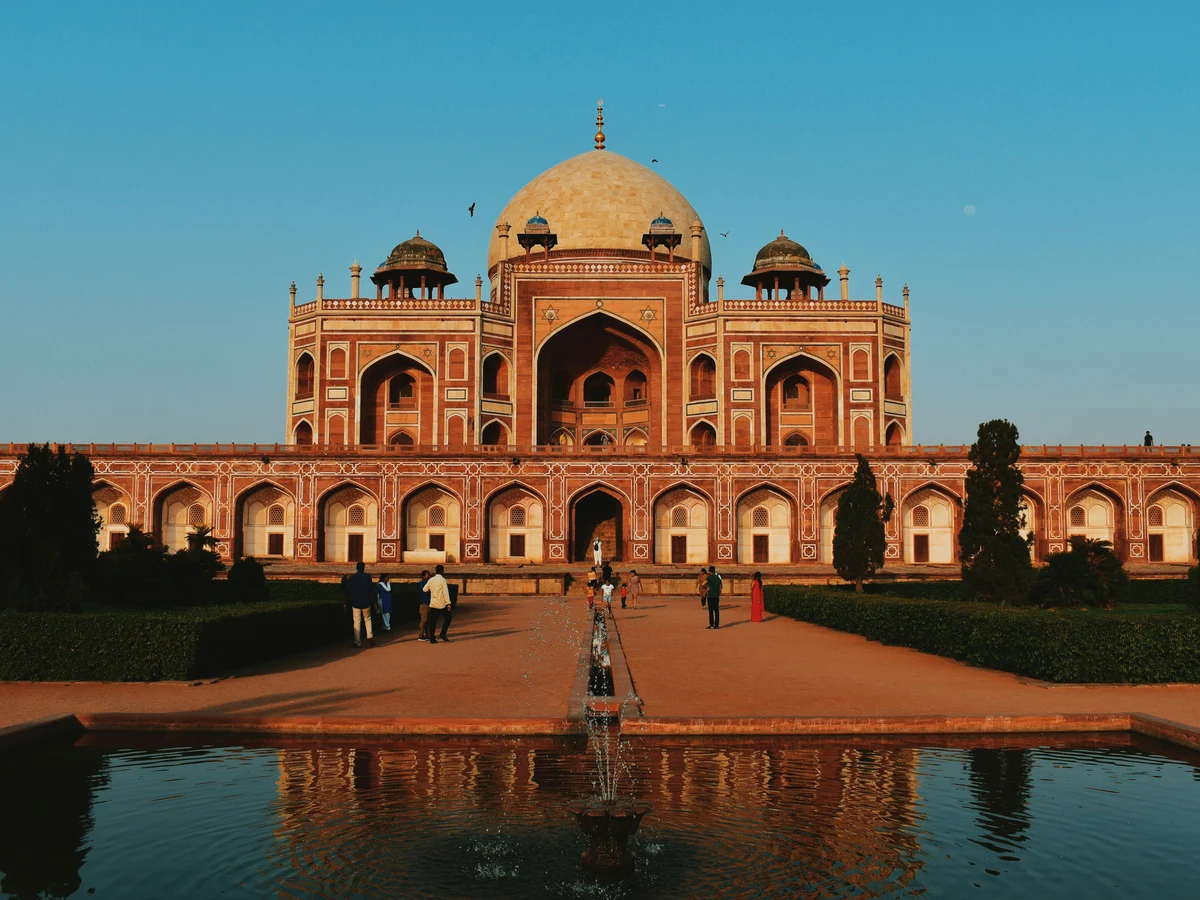
Old Delhi is the India many NRI families came from, dreamed about, or heard described at the dinner table growing up. Today you see it properly. A private rickshaw takes you through Chandni Chowk before the afternoon crowds arrive — through the lanes of Dariba Kalan where silversmiths have worked since the Mughal court, past the spice market where turmeric and cardamom rise in the air. Breakfast is at one of the chai stalls your guide has known for twenty years; lunch is at Karim's, the restaurant that has fed Delhi since 1913. In the afternoon the pace changes. You visit Humayun's Tomb — the prototype for the Taj Mahal, and quieter than its descendant — and then Qutb Minar, where an iron pillar has stood without rusting for sixteen centuries. Evening returns to your hotel for dinner at its acclaimed restaurant, or your concierge can arrange a reservation at one of Delhi's celebrated chef-run tables.
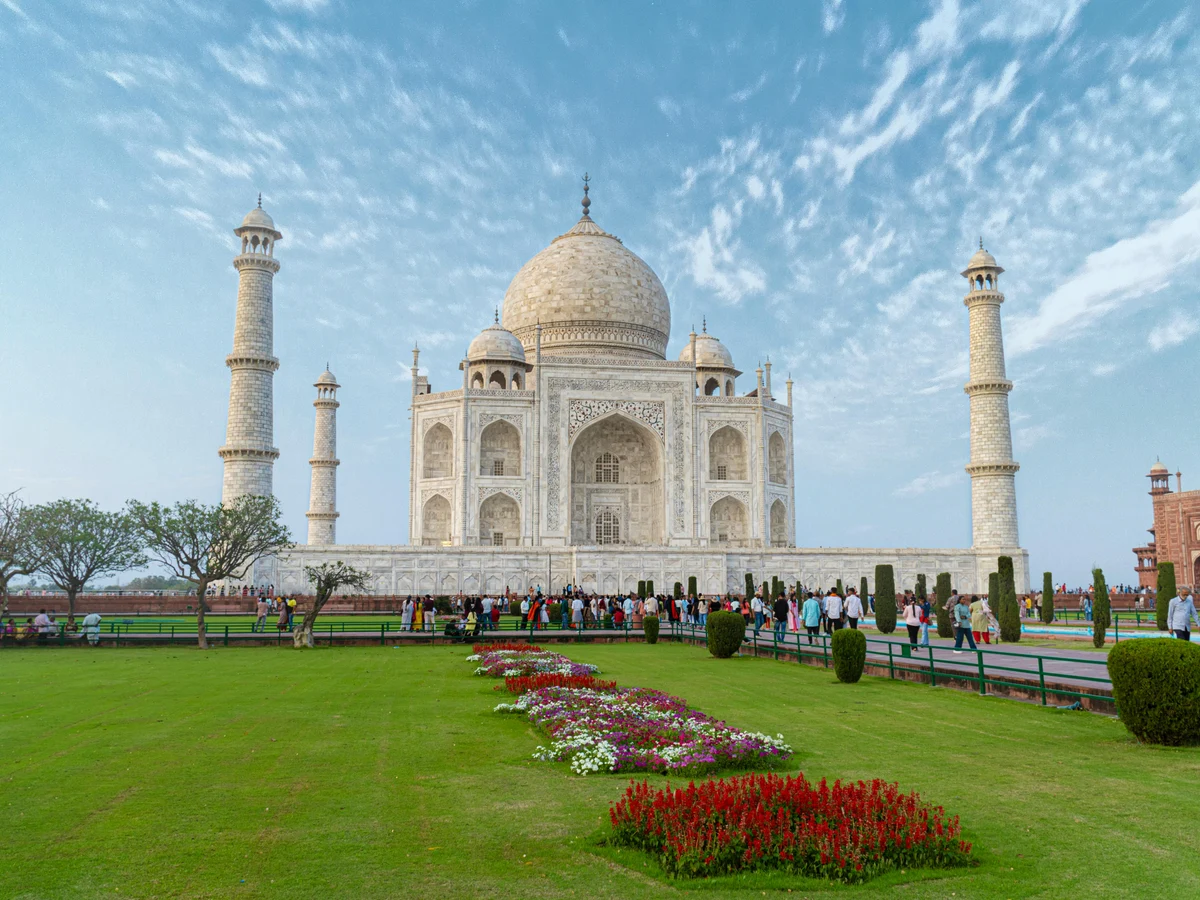
This morning's drive to Agra takes the same road the Mughal emperors once travelled by imperial procession. Your vehicle pauses at Fatehpur Sikri, the red sandstone city Akbar built and abandoned — the Great Mosque, the Buland Darwaza, the carved tomb of Salim Chishti where emperors prayed for heirs. Then it is Agra, and then the moment that stops even those who have seen photographs all their lives: the first glimpse of the Taj Mahal through the great southern gateway, framed in its entirety, precisely centred, exactly as the emperor intended. Check-in at Oberoi Amarvilas is unlike any hotel arrival: every room faces the Taj Mahal directly, and as the afternoon light shifts, the marble shifts with it. You need not leave the terrace. The Taj Mahal will come to you.
Your guide begins the day at gate-opening, thirty minutes before sunrise. At this hour the Taj complex holds perhaps fifty visitors. The marble shifts from grey to pale rose to luminous white in less than twenty minutes — a colour change so gradual and complete that no photograph captures it. Your guide gives you time and space to be here without commentary. Afterwards, a slow breakfast back at Amarvilas looking at the monument you have just walked inside. The afternoon is Agra Fort: the Musamman Burj, where Shah Jahan spent his final years imprisoned by his son, allowed one comfort — the window through which the Taj was always visible. From Mehtab Bagh, directly opposite the Taj across the Yamuna, the sunset view is reflected in the river below.
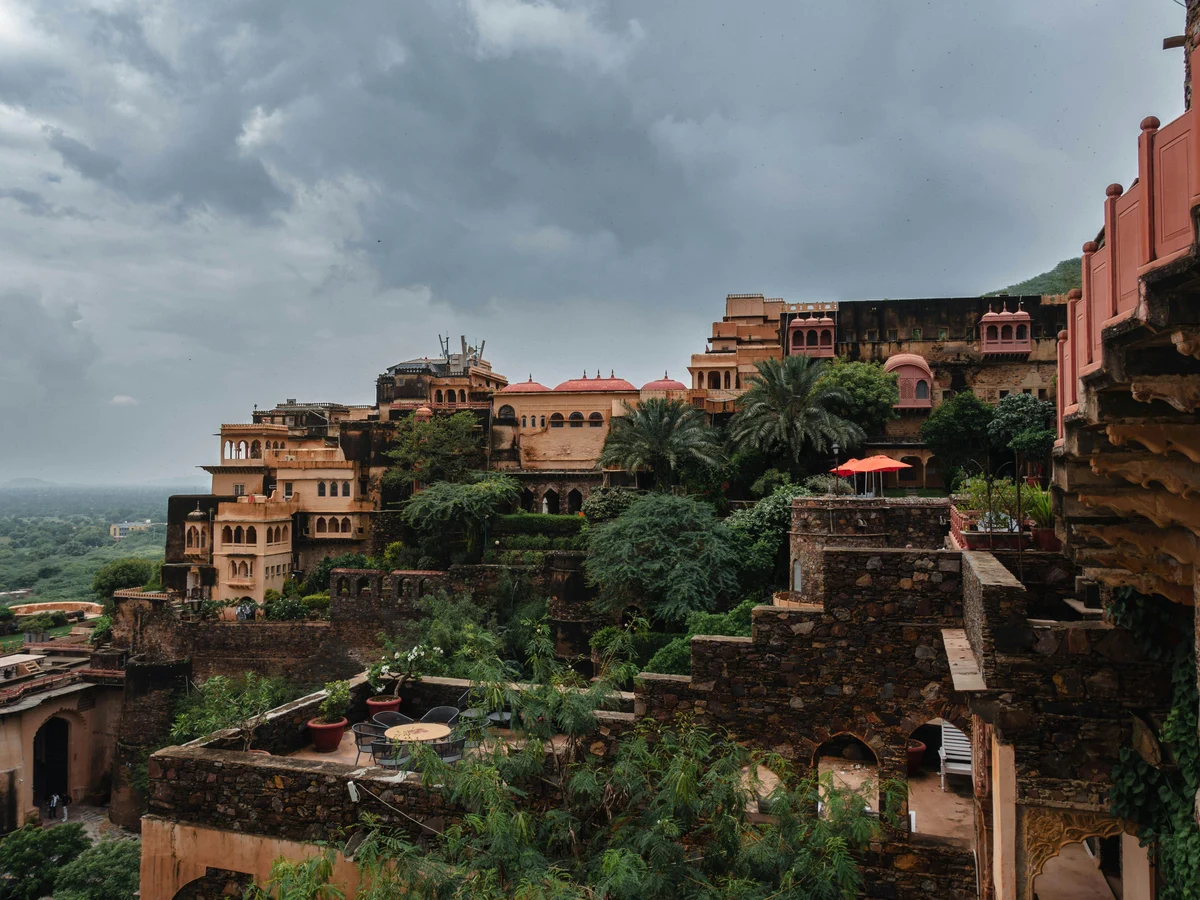
The road west from Agra carries you out of the Mughal world and into Rajasthan. This is a different India: ochre and rust, turban and moustache, forts on every hilltop, camels at the roadside. Your vehicle makes the journey comfortable — cool air, good coffee in the flask your hotel packed, a route your driver has known for years. Jaipur arrives in the late afternoon, and Oberoi Rajvilas or equivalent is not a city hotel but a private estate: 32 acres of gardens, a converted 18th-century temple at its heart, private pool villas available on request. This is the right base for Jaipur — arriving here after the city's noise feels like the contrast Rajasthan seems designed to produce. Dinner tonight at the hotel's Rajasthani restaurant, where recipes have roots in the cooking of the old Marwar kingdom.
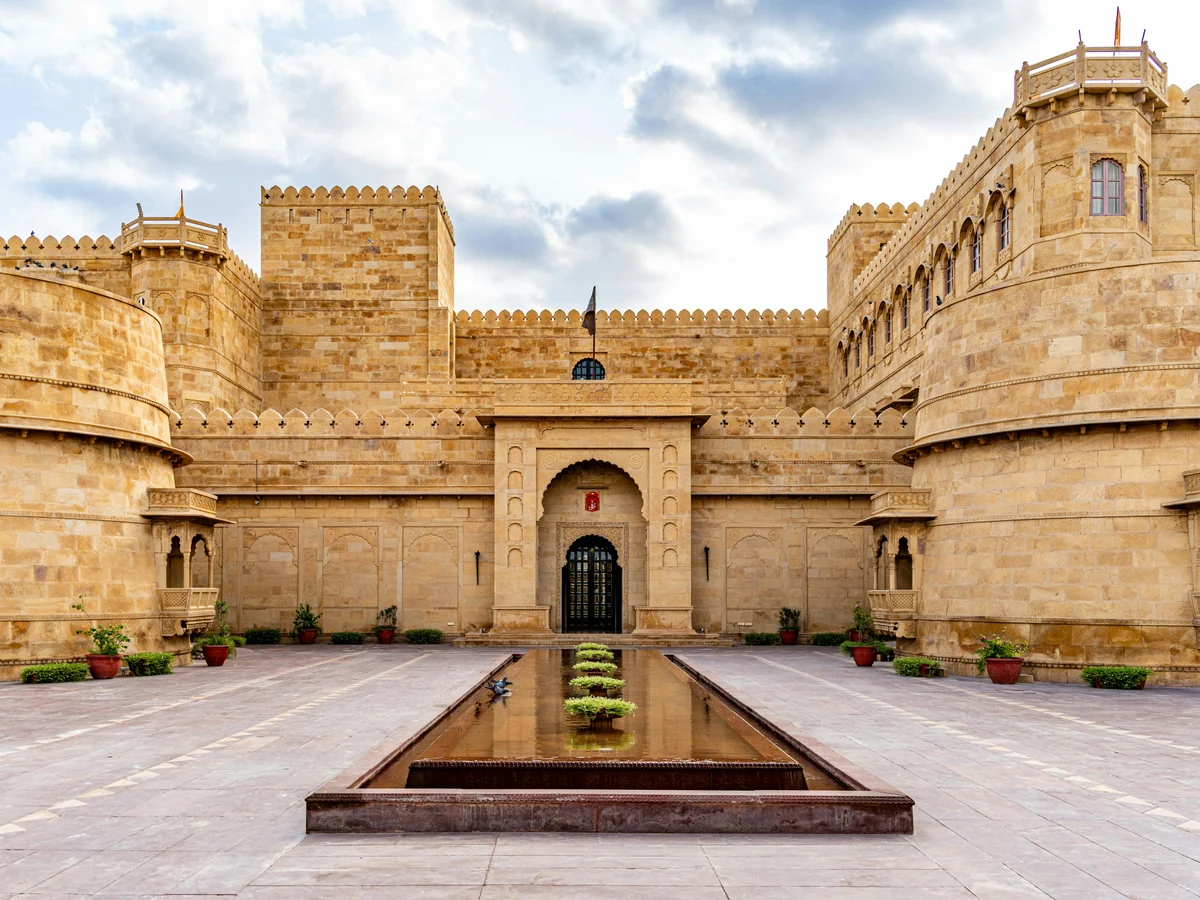
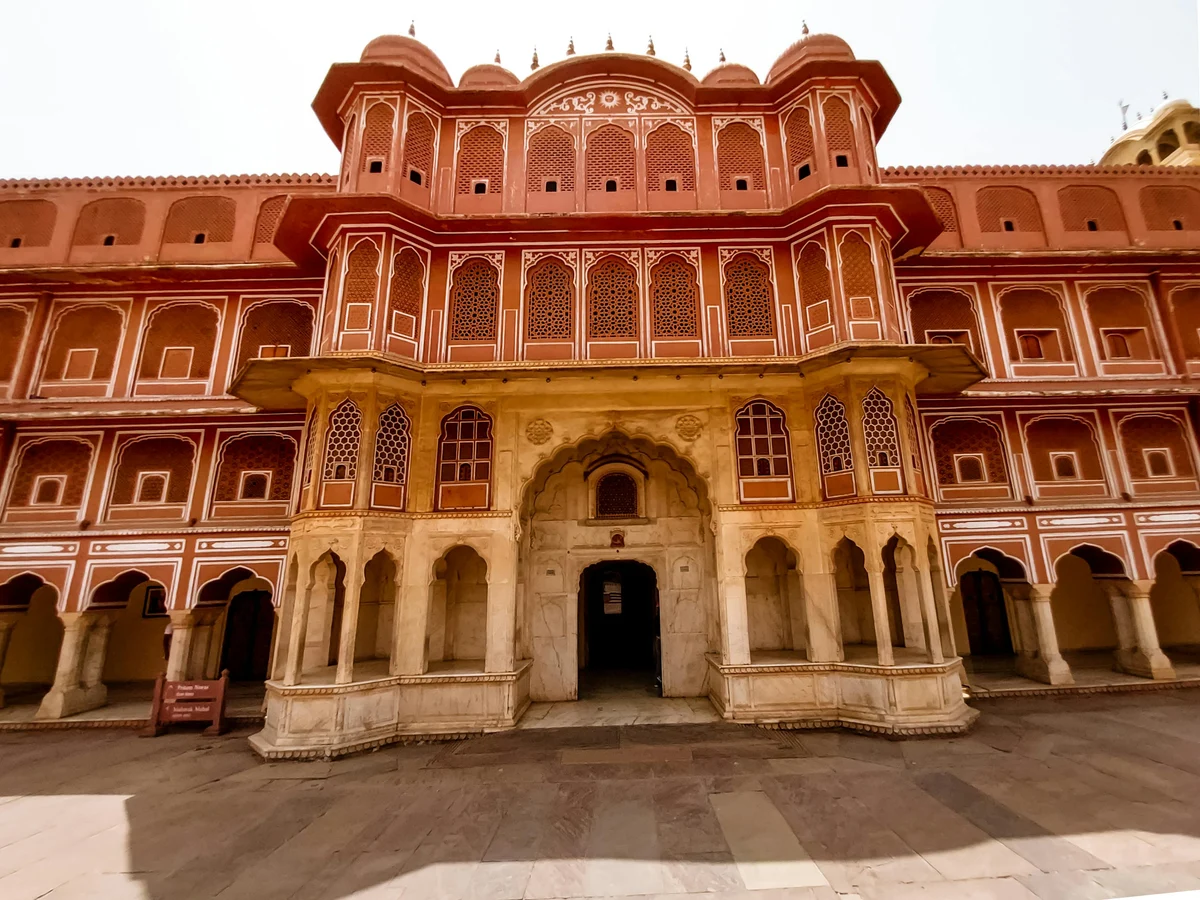
Amber Fort at 8am, before the tourist coaches arrive, is a different place from the one most visitors see. Your private Gypsy climbs the ramp used by the Kachwaha rulers for 400 years. Inside: the Sheesh Mahal, whose walls are composed entirely of tiny mirror fragments that a single candle ignites into a galaxy. Your guide was born in Jaipur and has walked these rooms all his life; he knows which details to linger on. City Palace in the afternoon: the Diwan-i-Khas, the enormous silver vessels cast for Maharaja Sawai Madho Singh II's voyage to London, and Jantar Mantar, the 18th-century observatory where instruments are still accurate to within two seconds. The evening is Johari Bazaar, with your guide taking you to a trusted family jeweller on Haldion ka Rasta — no pressure, no commission, just knowledge and Jaipur's famous gems.
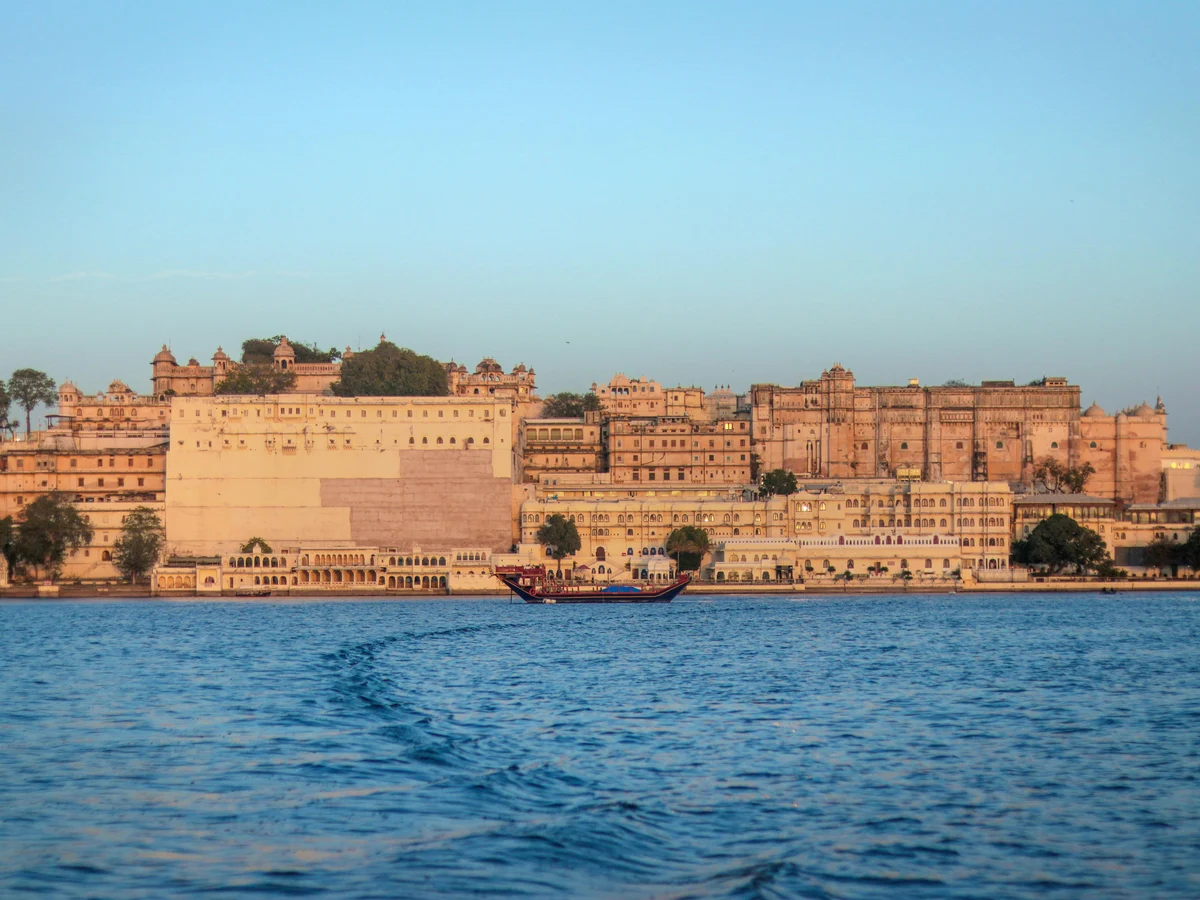
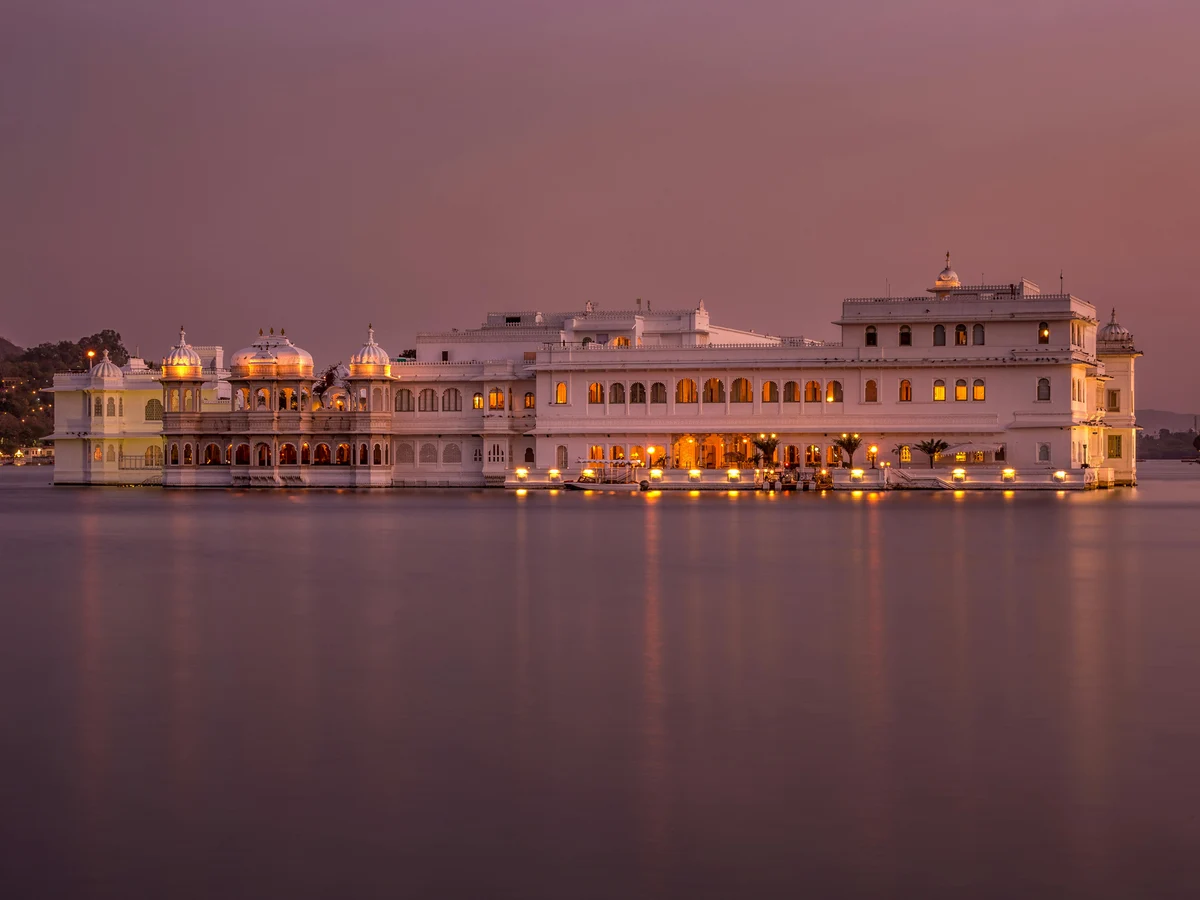
The drive south from Jaipur to Udaipur winds through the Aravalli Hills — the oldest mountain range on earth — before the extraordinary moment when Udaipur reveals itself: a city of white palace architecture arranged around three blue lakes in a desert state. Your vehicle brings you to the lake shore and a private launch takes you to Taj Lake Palace. There is no other arrival quite like it. The hotel occupies the entire island of Jag Niwas. Maharana Jagat Singh II built it in 1746 as a pleasure palace. The launch crosses Lake Pichola and docks at the arched entrance, and you are inside an 18th-century Rajasthani palace with no roads, no vehicles, no city sounds — only the water and the white walls and the Aravalli Hills on every side.
Udaipur is the India of pure romance and deserves at least two full days. This morning begins in City Palace, the largest palace complex in Rajasthan. The Crystal Gallery contains the 1877 commission from F&C Osler of London — furniture, bed frames, decanters, even a crystal sofa — an extraordinary Victorian-Rajput cabinet of curiosities. The Mor Chowk, tiled in peacock-mosaic glass, stops most visitors in their tracks. After lunch overlooking the lake, the afternoon slows: Saheliyon ki Bari, the Garden of the Maidens, built for royal handmaidens of the 18th century. As evening approaches, a private boat on Lake Pichola takes you to Jag Mandir island for drinks watching the sun descend behind the hills. The lake turns gold and then rose, and the two palaces reflect in the water. There are moments on this journey that explain why it was designed the way it was. This is one of them.
Your morning flight carries you from Rajasthan's pale stone world to India's loudest, most energetic city. Mumbai is different from every other city on this journey. It is an argument for the future rather than a monument to the past. Your vehicle from Chhatrapati Shivaji Maharaj International Airport takes you to The Oberoi Mumbai or Taj Mahal Palace Hotel, both facing the sea. After check-in, an early evening walk along Marine Drive — the Queen's Necklace — as the sun drops into the Arabian Sea. The city prepares itself for the night. For dinner, your concierge can arrange Wasabi, Yauatcha or one of the extraordinary independent restaurants the city's neighbourhoods produce.
Mumbai requires the kind of guide who can read its layers. Yours can. The morning begins at the Gateway of India — the 1924 colonial arch through which the last British troops departed India in 1948. Elephanta Caves are worth the ferry crossing: 6th-century rock-cut temples on an island in the harbour. The afternoon changes register completely with Dharavi — not poverty tourism but a window into an economy of extraordinary complexity: 15,000 single-room factories producing leather goods, textiles, recycled plastics. Your guide explains it without romanticising or diminishing. Chhatrapati Shivaji Terminus in the evening light, the Victorian Gothic station that UNESCO protects, is the finest place to watch this city's pace. Dinner tonight at a restaurant of your choosing, reservations arranged by your concierge.
Your morning flight from BOM to GOA takes less than an hour. The sky changes as the coast approaches — darker green, wider beaches, Portuguese rooftops among the palms. Goa is not the India of Mughal architecture or Rajput forts. It is Iberian, Catholic, laterite-stone, cashew-wine and sea-wind. Your hotel for the next two nights is Taj Exotica Resort & Spa on Benaulim beach, with the Arabian Sea across the garden. The afternoon is entirely free. Tomorrow is for exploring. Today is for the beach, a long lunch, perhaps a massage at the spa. Goa rewards not rushing.
Old Goa is a UNESCO World Heritage Site and deserves the morning. The Basilica of Bom Jesus contains the tomb of St Francis Xavier, whose body has been in the church since 1613. Across the square, the Sé Cathedral is the largest church in Asia. A spice plantation in the afternoon — where you walk through nutmeg, pepper, cardamom and jackfruit groves and then eat a traditional Goan lunch on the terrace. The late afternoon is the beaches the backpackers made famous, followed by a sunset at Vagator or Arambol, then dinner at Vinayak or at the hotel for the best caldine and prawn balchão in South Goa. The evening has the particular quality of a place that has always known how to slow time.
Your morning flight from GOA to COK tracks south along the coast. Below you, as the aircraft crosses into Kerala, the land changes: greener, denser, more layered than anything to the north. Fort Kochi is where you spend the first afternoon: the Chinese fishing nets on the waterfront, cast in the frame-and-counterweight system Chinese traders brought to Kerala in the 14th century; the Jewish quarter of Mattancherry; the 1568 synagogue still in use; the Dutch Palace where Keralan murals cover every wall. Fort Kochi is small enough to walk and rich enough to spend hours in. Then Taj Malabar, the colonial-era hotel on Willingdon Island, overlooking the backwater channels. Tonight is a Kathakali performance in an intimate venue where your guide explains the facial vocabulary that communicates the entire Mahabharata without a single word.
A slower morning: breakfast at the hotel, then the Spice Market in Jew Town. The smell of Mattancherry's spice warehouses is one of the sensory signatures of Kerala — black pepper, dried ginger, cinnamon bark. This is the coast that drew Portuguese, Dutch, British and Arab traders, and all of their layers remain visible in a single street. Your guide takes you into Fort Kochi on foot: the St Francis Church where Vasco da Gama was originally buried, and then into a traditional Keralan home in the lanes behind the main road for a cooking demonstration with a local family — curry paste ground fresh, coconut milk pressed by hand. In the evening, the backwater lamps come on across the water as you eat dinner at the hotel. Tomorrow the backwaters begin.
The road south from Cochin to Alleppey is 90 minutes through the coconut corridor — palms on both sides, canals running parallel to the road, churches and temples every few kilometres. At the Alleppey jetty, your private kettuvallam awaits. The premium vessel has an open deck at the front, a glass-sided dining room, an air-conditioned bedroom with a proper bed and attached bathroom, and a crew of three: captain, cook and guide. The cook prepares lunch while the boat moves — karimeen cooked in banana leaf, prawn curry with raw mango, appam and stew. The backwaters in winter light are the colour of old jade. Kingfishers work the surface. An occasional canoe passes without a sound. Everything that has happened on this journey — the noise of Old Delhi, the precision of Amber Fort, the surreal peace of Lake Pichola, the heat of Goa — all of it settles here, on this boat, on this water. Your final night in India is spent moored on Vembanad Lake under a sky entirely free of city light.
The boat returns to Alleppey jetty in the morning. Your private vehicle brings you the 90 minutes back to Cochin International Airport for your international flight. Your concierge will have confirmed baggage and check-in details the previous evening. There is no rush — the journey has been 15 nights and 8 destinations: Delhi to Cochin, Rajasthan to Kerala, North India to the coast. What you carry home from it is something no itinerary can fully predict. Almost everyone who makes this journey says some version of the same thing: that India surprised them — not in the way they expected, but in a quieter, more lasting way. We hope it does the same for you.
What's included
Included
- Fully private arrangements throughout
- Handpicked accommodation (tier confirmed at booking)
- All ground transfers and transportation
- Local expert guide (English-speaking)
- NRI concierge pre-trip support via WhatsApp & email
- OCI entry assistance guidance
Not included
- International flights to India (land-only package)
- Visa fees if applicable
- Travel insurance
- Personal expenses & tips
About India
▾
Region: Multi-Region India, India.
Best time to visit: October, November, December, January, February, March.
Frequently asked questions
We recommend booking at least 3–4 months in advance for peak season travel (October–March). For off-peak travel, 6–8 weeks is generally sufficient. Bespoke itineraries need a minimum 8 weeks for full confirmation.
Price on Request
We'll prepare a tailored quote within 24 hours.
Get a QuoteWhatsApp +91 89899 20981Usually within 24 hours · No obligation
Prices last updated: 5 April 2026
Gwalior (India HQ) office
Mon–Sat 9 am–7 pm IST
All contact options →Family-run since 2008
Personal relationships with hotels and guides — not a call centre.
IATA Accredited
Internationally recognised travel agency — your money is protected.
24/7 in-country support
Local teams in destination available around the clock during your trip.
More NRI India Holidays tours
View all NRI India Holidays tours → On Request
Andaman Homecoming: NRI Honeymoon Escape
A homecoming honeymoon with private NRI concierge, private transfers and family meet-ups across the Andamans.
Price on Request
 On Request
Andaman Homecoming: Island Reunion for NRIs
Reclaim island memories with private transfers, OCI-aware concierge and family logistics for Gulf NRIs.
Price on Request
 On Request
NRI Goa Family Escape — Homecoming to North & South Goa
A roots reunion by the sea — private transfers, NRI concierge and family-friendly beaches across Goa.
Starting from
From ₹19,100pp, twin sharing
Indicative price, varies by season
Six global offices. Uncompromising standards.
A North American-bonded travel company serving elite, HNI and UHNW clientele since 2008 — from Gwalior, Vancouver, Surrey, Toronto, Miami and Seattle
North American bonded · IATA accredited (India #14326885) · ACTA member · TAFI member · Est. 2008 · 6 global offices